Review: Days Till Halloween SVG for Embroidery Projects
As a designer who spends more time staring at stitch maps than most people care to admit, I approach new digital embroidery files with a healthy dose of skepticism. The market is flooded with generic holiday graphics that look fantastic on a screen but turn into a tangled mess under the needle. So, when I got my hands on the Days Till Halloween SVG T Shirt Design, my first instinct wasn't to rush to the machine. It was to evaluate whether this asset could actually hold up in a real-world craft business environment.
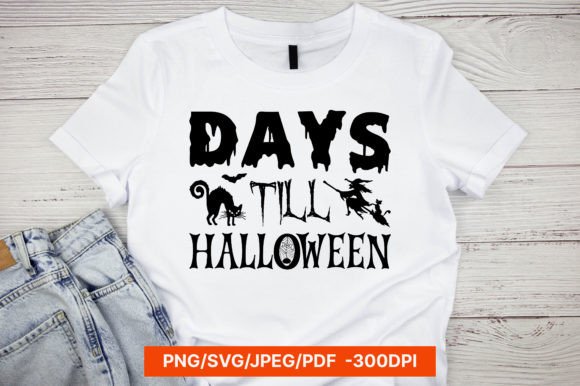
The initial impression of this design is promising. Unlike many sublimation-focused files that rely heavily on gradients and complex shading, this graphic has a bold, typographic personality that translates surprisingly well to thread. The layout is clean, with a clear hierarchy that suggests the creator understands how text needs to breathe. For an embroidery project, white space is just as important as the stitches themselves. This design offers enough room between elements to prevent the dreaded "puckering" effect, especially when working with stretchy fabrics like cotton blends commonly used for custom apparel.
Real-World Application: The Boutique Sweatshirt Test
To truly gauge the value of this file, I envisioned a specific scenario: a small batch order for a local boutique needing holiday embroidery items. The client wanted cozy, oversized sweatshirts featuring a countdown motif. This is where the Days Till Halloween SVG T Shirt Design shines. Because the design relies on strong lines and readable fonts, it creates an immediate visual impact without requiring thousands of stitches.
When digitizing or adapting this SVG for a machine embroidery design, the goal is to maintain that crisp edge. If you are using this as a base for a fill stitch approach, the solid shapes allow for a smooth satin or tatami fill that looks professional. For a more textured look, one could easily adapt the lettering into an applique design, cutting felt or fleece shapes to layer over the garment. This versatility adds significant value to the finished product, allowing you to charge a premium for a handmade item that feels bespoke rather than mass-produced.
I also considered how this would perform on a tote bag design. Canvas bags have a heavier fabric texture, which can sometimes swallow fine details. However, the robust nature of this graphic ensures that the message remains legible even on coarse weaves. Whether it is a trick-or-treat bag for kids or a stylish carrier for autumn market goods, the design anchors the product nicely.
Navigating Fabric Challenges and Stitch Density
While the design is strong, no graphic is universal. There are specific scenarios where you need to exercise caution. If you plan to use this on a curved surface, such as a cap or hat, the linear text might require careful positioning to avoid distortion. The "Days Till" phrasing implies a number that changes; if you are manually updating the number for each customer, ensure your digitization software handles the new numerals with the same stitch density as the original text. Inconsistent density can lead to uneven tension and a sloppy appearance.
Dark fabrics present another consideration. Since this is originally marketed as a sublimation file, the contrast is key. In embroidery, you must select thread colors that pop against the background. A bright orange or electric green satin stitch outline might be necessary if stitching directly onto black fabric to ensure readability. Conversely, on light-colored baby embroidery items like onesies, you might opt for softer pastels, but you must ensure the running stitch details don't get lost. Always test on scrap fabric first. What looks good on the monitor might vanish into the nap of a fleece hoodie.
Furthermore, pay attention to the hoop size. While the design seems compact enough for standard hoops, always measure the actual dimensions after importing the SVG into your editing software. Cramping a design into a hoop that is too small can restrict the stabilizer's ability to hold the fabric taut, leading to registration errors. Speaking of which, using the correct stabilizer is non-negotiable. For knits and sweatshirts, a cut-away stabilizer is usually best to support the weight of the threads over time, especially for items that will be washed frequently.
Commercial Viability and Brand Consistency
For Etsy sellers and creative entrepreneurs, the true test of a design asset is its ability to build brand trust. A sloppy stitch job tells a customer you don't care about quality. This design, when executed correctly, exudes professionalism. It fits seamlessly into a lineup of seasonal products, helping to create a cohesive collection for your small shop product range. Whether you are selling personalized gifts or ready-to-wear embroidered patches, consistency in presentation matters.
The "Days Till" concept is inherently interactive and engaging. It invites the viewer to do the math, creating a moment of connection. This psychological hook can boost buyer engagement on social media platforms where you showcase your printable mockup or behind-the-scenes stitching videos. It transforms a static image into a conversation starter, which is gold for marketing.
However, a crucial note on licensing: The product description mentions SVG, PNG, JPG, and PDF files intended for sublimation. Before using this as a commercial embroidery file, you must verify the license terms. Just because a file is vector-based (SVG) does not automatically grant rights for commercial embroidery sales. Some creators sell these specifically for print-on-demand or sublimation only. Always check the fine print to avoid copyright strikes on your listings. If the license allows for modification and commercial use, you are golden. If not, this might be strictly for personal handmade product creation or requires an upgraded license.
Final Verdict for Makers
The Days Till Halloween SVG T Shirt Design is a solid contender for your autumn toolkit. Its strength lies in its simplicity and adaptability across various Crafts and Graphics applications. It moves beyond being just a digital image and becomes a functional component of a tangible product. By paying attention to thread contrast, stabilizer choice, and fabric compatibility, you can elevate this simple graphic into a high-value item.
Remember, the difference between a hobbyist item and a professional commercial embroidery piece often comes down to the prep work. Test your tension, check your color contrasts, and respect the limitations of your materials. If you do, this design can help you deliver a finished product that customers will love wearing and displaying year after year. It is a reminder that even in the age of digital downloads, the human touch of the embroiderer is what truly brings a design to life.