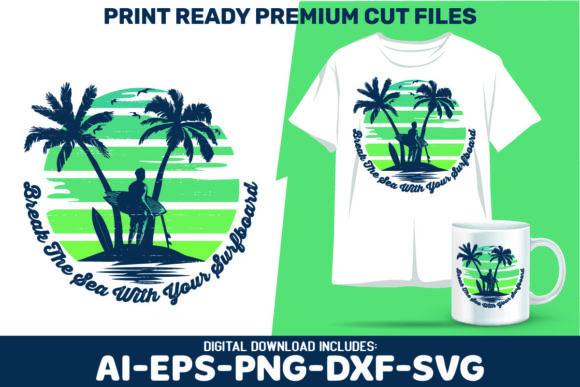
Review: Break the Sea with Your Surfboard SVG for Embroidery
As a designer who spends more time staring at stitch simulations than I do sleeping, I have learned that not every graphic translates well to thread. We see thousands of digital files flood the market, promising versatility and ease, but few survive the test of the needle. Recently, I pulled up Break the Sea with Your Surfboard SVG to evaluate its potential for a client’s summer capsule collection. This wasn’t just a casual browse; I needed to know if this design could hold its own on actual fabric, withstand the tension of the hoop, and deliver the vintage beach vibe my customer was demanding.
The first impression of Break the Sea with Your Surfboard SVG is undeniably strong. It captures that nostalgic, retro-coastal aesthetic that has dominated Crafts and apparel trends for the last few seasons. The layout feels balanced, with a clear focal point that doesn’t rely on excessive micro-details that often cause threading nightmares. For an embroidery product reviewer, this is the first green flag. A design that looks good on a screen but collapses into a messy puckered blob on cotton is useless to a serious Etsy seller or boutique owner. This file, however, suggests a level of intentionality in its line work and spacing that hints at a smoother transition from digital embroidery file to finished product.
Real-World Application: The Tote Bag Test
To truly judge a design, you have to imagine it in situ. I visualized this piece on a heavy-duty canvas tote bag, a staple for any beach-going demographic. The theme of breaking waves and surfboards naturally lends itself to large, open spaces where the design can breathe. On a tote, the Break the Sea with Your Surfboard SVG would likely serve as a central chest or back panel feature. Because the description highlights it as a vector-editable file, I had the flexibility to scale it appropriately without losing resolution, a critical factor when moving from a small embroidered patch concept to a larger garment application.
In this scenario, the vintage feel of the design works in our favor. Vintage styles often tolerate slightly looser stitch structures because they aren’t aiming for hyper-realistic photographic quality. This allows us to use standard fill stitch patterns for the water elements without worrying about extreme density that might stiffen the fabric too much. For a handmade product intended for daily use, such as a grocery or beach tote, durability is key. The open areas in the wave design suggest that air and movement won’t distort the image, maintaining the integrity of the embroidery project even after multiple washes.
Versatility Across Apparel and Home Decor
Beyond totes, I considered how this graphic would perform on custom apparel. A lightweight linen shirt or a structured sweatshirt offers two very different canvases. On a sweatshirt, the thicker fabric provides a stable base for the stitches, allowing the colors to pop. Here, the thread colors become paramount. Since the file is described as 100% color changeable, I could easily adapt the palette from traditional ocean blues to a muted, earthy tone for a more subdued, high-end boutique look. This adaptability is crucial for small shop product lines that need to offer variety without redesigning from scratch.
However, caution is required when applying this to curved surfaces like caps. While the design is striking, the horizontal spread of the surfboard and wave might exceed the standard hoop size of a typical cap frame. If you are planning sweatshirt embroidery or flat items like pillow covers and tea towels, the dimensions are likely ideal. But for hats, you would need to verify the width against your machine’s maximum hoop capacity. Additionally, tiny lettering or intricate corners in the wave crests could get lost on textured fabrics like terry cloth towels. In those cases, simplifying the design or increasing the scale is a necessary step to ensure stitching clarity.
Technical Considerations for the Stitcher
Let’s talk about the mechanics. The description notes that this is a vector-editable file, which is a significant advantage for us as designers. It means we can clean up nodes, adjust paths, and optimize the flow before converting it into a machine-readable format. However, being vector-based does not automatically mean it is digitized for embroidery. If you are purchasing this as a Graphics asset for sublimation or print, it is ready to go. If you intend to use it for machine embroidery, you must ensure you have the proper digitizing software or service to convert those vectors into actual stitch files, unless the download includes pre-digitized formats.
When preparing this for stitching, pay close attention to stitch density. Large fill areas in the sea portion can pull on lightweight fabrics. Using a cut-away stabilizer is non-negotiable here to prevent distortion. For darker fabrics, consider using a satin stitch border around the main elements to create a crisp edge that separates the design from the background material. This technique enhances the professional look of the personalized gift or commercial item, making the colors appear more vibrant and the edges sharper.
Another practical note: always test on scrap fabric first. What looks perfect in a printable mockup can behave differently under the needle. Check how the thread interacts with the fabric texture. If you are creating baby embroidery items, ensure that the back of the stitching is covered or soft enough not to irritate sensitive skin, as dense fills can sometimes feel rough on the reverse side.
Commercial Value and Brand Consistency
For commercial embroidery professionals and craft business owners, the visual appeal of Break the Sea with Your Surfboard SVG translates directly to perceived value. Customers associate clean, well-executed vintage designs with higher quality. When this design is stitched correctly, it elevates a simple t-shirt or apron into a desirable holiday embroidery gift or a standout piece in a summer collection. It helps build brand consistency by offering a recognizable aesthetic that customers can trust.
Moreover, the exclusivity mentioned in the product description can be a selling point. If this design is not saturated across every major marketplace, it offers a unique angle for your design assets portfolio. Buyers are increasingly looking for unique motifs that don’t look mass-produced. By carefully selecting fabrics and thread combinations, you can create a finished product that feels bespoke and thoughtful, fostering greater buyer engagement and repeat business.
Final Verdict
In conclusion, Break the Sea with Your Surfboard SVG is a promising asset for designers who understand the nuances of translating graphics to thread. Its vintage charm and editable nature provide a solid foundation for a variety of projects, from tote bag design to custom apparel. However, success lies in the execution. Respect the limitations of your hoop size, choose your stabilizers wisely, and always test your stitch out. When handled with professional care, this design has the potential to become a staple in your summer lineup, delivering both aesthetic pleasure and commercial viability.