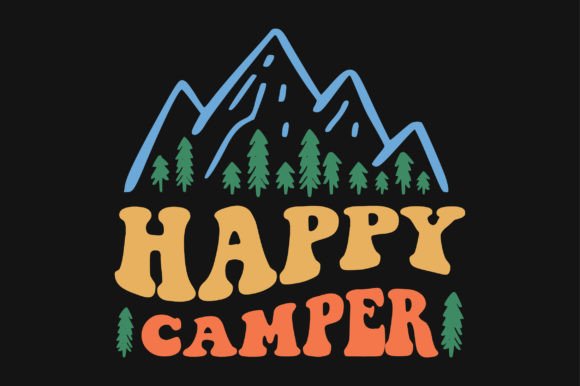
Happy Camper Camping SVG: A Designer's Review
As someone who spends more time staring at stitch maps than most people care to admit, I approach new design assets with a healthy mix of excitement and skepticism. When I first pulled up the Happy Camper Camping SVG T-shirt Design, my initial reaction was purely visual. It hits that sweet spot of rustic charm without feeling dated or overly cliché. The mood is immediate: it speaks to weekend getaways, s'mores by the fire, and that specific kind of relaxed nostalgia that sells incredibly well in the current market. However, as an embroidery product reviewer, my job isn't just to say "it looks cute." I need to determine if this graphic translates effectively from a vector screen display to a tangible, stitched finished product.
First Impressions and Visual Personality
The core strength of this design lies in its simplicity. The description notes that it is made with 100 vector shapes, which usually indicates a clean, modular construction. In the world of Crafts and Graphics, clean lines are everything. When you are dealing with thread, complexity can quickly turn into a muddy mess if the details are too tight. This design feels open and airy. The layout suggests a balanced composition where the elements breathe, which is crucial for maintaining clarity once the needle hits the fabric.
The theme is universally appealing. Whether you are targeting outdoor enthusiasts, families who love hiking, or just people who enjoy the aesthetic of cabin life, this graphic fits. The visual personality is friendly and inviting. It doesn't scream for attention with aggressive colors or chaotic patterns; instead, it offers a warm welcome. For an Etsy seller or a small shop owner, this kind of versatile appeal is gold. It allows you to pivot the design across different demographics simply by changing your thread palette.
Real-World Application: The Custom Tote Scenario
To truly test the viability of the Happy Camper Camping SVG T-shirt Design, I imagined a specific real-life scenario: creating a line of custom canvas tote bags for a local outdoor gear boutique. Canvas is a textured, somewhat heavy fabric that can be unforgiving if a design isn't robust enough.
In this context, the design shines. Because the shapes are distinct and likely not overly dense, they would translate beautifully onto canvas using a combination of satin stitch for outlines and a light fill stitch for larger areas. The result would be a professional-looking handmade product that feels durable. If I were stitching this on a sweatshirt for a personalized gift, the scalability mentioned in the file description becomes vital. Being able to resize the vector without losing quality means I can adapt it for a small pocket logo on a flannel shirt or a large back print on a hoodie.
For custom apparel, the color flexibility is a major plus. The file description highlights that colors are easy to change. In practice, this means I can swap out standard greens and browns for pastels to create a spring collection, or use high-contrast neons for a youth camp merchandise line. This adaptability directly impacts customer trust and brand consistency. If a client wants their specific brand colors applied to this camper motif, the vector nature of the file makes that transition seamless.
Navigating Fabric Textures and Hoop Limitations
While the design is strong, practical embroidery work always requires caution. Not every surface is created equal. If you are planning to use this on a stretchy fabric like a thin jersey t-shirt, you must be mindful of the stitch density. Even though the vector shapes are clean, if the digitized version (which you would generate from this SVG) is too dense, it could cause the fabric to pucker or warp. Always test on scrap fabric first.
Similarly, curved surfaces like caps present a challenge. The Happy Camper Camping SVG T-shirt Design has a relatively wide footprint. Fitting this into a standard cap hoop size might require scaling it down significantly. If you shrink it too much, those fine details—the little windows of the camper or the texture of the trees—might lose definition. For hats, I would recommend simplifying the internal details or ensuring your digitizing software handles small text and intricate corners well before committing to a production run.
Dark fabrics also require strategic thinking. If you are stitching this onto a black navy jacket, you cannot rely on the background of the design to show through. You will need to plan for a solid underlay or perhaps consider turning this into an applique design where the camper shape is cut from felt or twill and then stitched down. This adds texture and ensures the colors pop against dark backgrounds, enhancing the overall visual appeal.
Commercial Viability and Market Fit
For commercial embroidery projects and digital product sellers, the value of a file often comes down to how many different products it can support. This design checks those boxes. It works for holiday embroidery (think Father's Day or Christmas gifts for the outdoorsy dad), baby embroidery (for a nursery-themed onesie), and even home decor like pillow covers or tea towels.
The professionalism of the final output depends heavily on your execution. A well-stitched version of this design elevates a basic garment into a boutique item. It signals to the buyer that thought went into the creation. For small business merchandise, this kind of recognition is essential. Customers are willing to pay a premium for items that look polished and intentional. Furthermore, because the source file is a vector, it serves double duty. You can use it for physical stitching and also for printable mockups to showcase your products online before you even stitch a single thread.
Practical Notes for the Embroidery Designer
Before you load this into your machine, there are a few critical steps to ensure success. First, remember that this is a vector file (SVG, EPS, AI). You cannot plug an SVG directly into most embroidery machines. You will need to digitize it or use conversion software to turn it into a proper embroidery file format compatible with your machine. During this process, pay close attention to the running stitch lengths and the direction of your fills to match the flow of the original artwork.
- Stabilizer Selection: Match your stabilizer to your fabric. Cut-away is best for stretchy knits to prevent distortion over time, while tear-away works well for stable wovens like cotton tote bags.
- Thread Contrast: Test your thread colors against the fabric. What looks good on screen might vanish on a busy patterned fabric. High contrast usually yields the best results for this style of graphic.
- Licensing Check: The product description mentions commercial potential, but always verify the specific license terms. Ensure you are allowed to sell finished physical items versus digital files derived from this artwork.
- Detail Inspection: Zoom in on the smallest elements. If there is tiny lettering included in the variation you choose, ensure it is large enough to be legible when stitched. Small text often needs to be simplified or removed for smaller hoop sizes.
Ultimately, the Happy Camper Camping SVG T-shirt Design is a solid contender for your library. It offers the flexibility needed for a diverse range of projects while maintaining a cohesive, charming aesthetic. With careful attention to digitizing settings and fabric choices, it can become a staple in your craft business, delivering high-quality, recognizable results that customers love to take home.